Reliable Power, Real Jobs: What Africa’s Growth Demands.

Kosmos Energy Announces First Quarter 2026 Results
May 5, 2026
Kosmos Energy Announces Completion of Sale of Equatorial Guinea Production Assets to Panoro Energy
June 17, 2026This essay was originally published as a letter to stakeholders in Kosmos Energy’s 2025 Sustainability Report.
Fellow stakeholders,
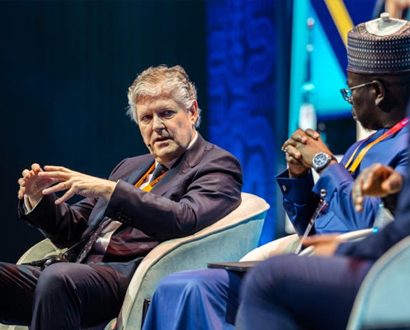
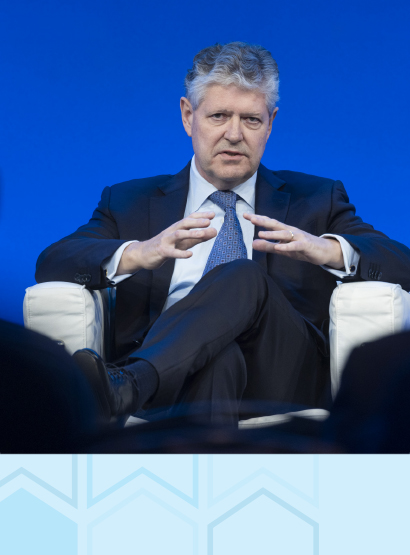
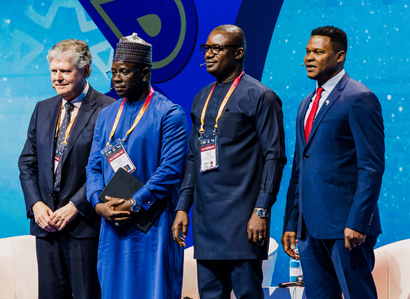
Over the past several months, I’ve had many conversations with Presidents and senior Ministers from across West Africa. Different countries, different political contexts – but a remarkably consistent message. Their populations are growing, expectations are rising, and the pressure to create jobs is immediate. And behind closed doors, those discussions keep returning to the same practical reality: without reliable, affordable energy, businesses don’t invest, productivity stalls, and jobs don’t materialize at scale. Recent global supply disruptions and price swings have only made that reality harder to ignore.
Those leaders in West Africa have moved past abstract debates about the energy mix. They are focused on delivery and controlling their country’s economic destiny – on what will keep businesses running, lower costs for entrepreneurs, and give young people a reason to believe opportunity can be created at home. In those discussions, the starting point is clear: energy must be reliable and affordable enough to support investment, enterprise, and job creation at scale. Long-term sustainability matters, but it must be pursued in ways that reinforce – not undermine – that foundation.
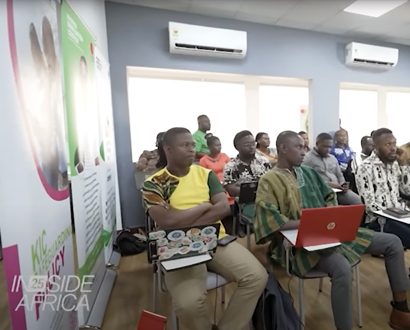
After decades working in the energy sector and across markets, I’ve seen a familiar pattern. Where power is unreliable or priced out of reach, economic growth slows and employment stagnates. Where electricity is dependable and affordable, investment becomes possible. And with it comes the steady creation of jobs that underpin lasting development.
“Where electricity is dependable and affordable, investment becomes possible. And with it comes the steady creation of jobs that underpin lasting development.”
Reliability Is What Turns Power into Progress
Africa’s energy challenge is often narrowly described in terms of access – how many people are connected to the grid. Access matters. But for economic growth, reliability is what powers economies.
When power is unreliable, businesses behave defensively. They delay investment, scale back hiring, or divert capital into backup generation and fuel instead of expansion. The effects compound over time. Productivity slips. Costs rise. Competitiveness erodes. This doesn’t just slow economic growth, it locks societies out of modern living standards.
Research consistently shows that outages reduce company performance, discourage new business formation, and lower employment – particularly in non-agricultural and more skilled jobs. Where outages are frequent, job creation suffers even when connections exist. Without reliability, connections alone do not deliver the economic outcomes policymakers and citizens are counting on.
This is why the leaders I work with place so much emphasis on dependable power when they talk about jobs. It determines whether a manufacturer can meet orders, whether a food processor can operate cold storage, or whether a services business can rely on digital infrastructure.
The Role of Domestic Gas
Faced with this reality, natural gas – particularly domestic gas – plays a vital role in many African power systems. It stabilizes grids, secures economic activity, and helps lower both costs and emissions. The right energy mix will vary by country, and those choices are best made by governments responding to local realities, local priorities, and what works in practice.
Domestic gas can materially improve reliability and affordability compared with imported liquid fuels like diesel. It reduces exposure to volatile international markets and external supply shocks. It provides steady generation that complements renewables. For countries focused on growing industry and creating jobs now, those attributes matter.
“Today, the Jubilee partnership supplies roughly 25 percent of the gas used in Ghana’s power sector.”
Ghana’s experience illustrates this pragmatism. From 2014 to 2023, Kosmos and the Jubilee partners supplied more than 200 billion cubic feet of gas – at no cost – to support the development of national infrastructure and domestic power generation. Based on export prices at the time, that foundational volume was worth approximately $1.5 billion. Over that period, increased use of natural gas from the Jubilee and TEN fields coincided with expanded electricity access, a sharp reduction in reliance on imported liquid fuels, and a meaningful decline in the carbon intensity of power generation. That transition did not solve every challenge in the sector. But it improved reliability, strengthened security of supply, supported economic activity, and lowered costs.
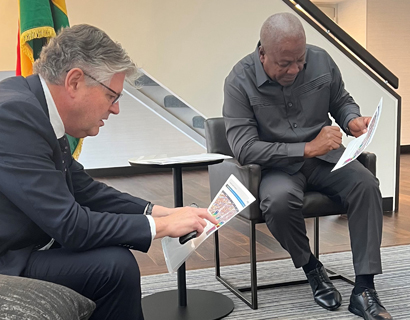
Today, the Jubilee partnership supplies roughly 25 percent of the gas used in Ghana’s power sector. As I have discussed with President Mahama, we are aiming to provide even more – to further support job creation and the expansion of industry.
In Mauritania and Senegal, we see the foundation for a similar impact. Greater Tortue Ahmeyim Phase 1 is now producing natural gas that is being liquefied for export to global markets, firmly establishing both countries as reliable LNG suppliers and a new source of LNG for customers wishing to diversify. While GTA gas is not yet used for domestic power generation, advancing local use is a logical next step as future phases are developed and supporting infrastructure is put in place. This remains a focus of our ongoing discussions with both governments and our partners.
This kind of progress is not always reflected in how energy transitions are discussed globally. But it reflects how development actually happens – through incremental improvements that make systems work better for people and businesses today, while creating space for cleaner technologies to scale over time.

Climate Responsibility, Approached Pragmatically
Climate considerations are an important part of energy planning, but development realities must remain central. Energy demand across Africa will grow as populations expand and economies work to create jobs and opportunity. The question is how to meet that demand responsibly while improving lives.
Even with rising electricity use, Sub-Saharan Africa remains a small contributor to global emissions. That context is important when setting priorities. Progress comes from improving how energy is produced and used in the real world today – reducing routine flaring, improving efficiency, and using natural gas to displace higher-emissions fuels.
In Ghana and Equatorial Guinea, we are working with our operating partners to minimize routine flaring and reduce emissions from our operations. Our current target is to reduce Scope 1 equity emissions by 25 percent by 2026, compared with a 2022 baseline. Over the longer term, we are focused on achieving and maintaining top quartile carbon intensity across both our oil and gas portfolios.
Where Companies Like Kosmos Fit
Progress like we’ve seen in Ghana, Mauritania, and Senegal requires an aligned agenda with host countries built on clarity of roles.
Governments set policy, plan infrastructure, and regulate industry and power markets. Utilities and grid operators determine whether electricity reaches homes and businesses reliably. Development institutions and capital markets influence what gets financed and when. Stable frameworks, investable conditions, and the ability to deliver projects consistently matter just as much as resource potential.

Companies like ours operate within that framework. We don’t control the system. But we do contribute where we have expertise – by developing domestic resources responsibly, investing with discipline, partnering with national institutions, and supplying reliable energy that supports broader national objectives.
Credibility in this industry is earned through delivered outcomes. It shows up in reliable supply delivered year after year, in steadily improving emissions performance, and in the quality of partnerships built with host governments over time. We don’t claim to solve the entire challenge. But we do hold ourselves accountable for delivering our part – and delivering it well.
What Africa’s Growth Demands
Africa’s jobs challenge is urgent, and it is inseparable from energy. Reliable, affordable power is not a slogan. It is a prerequisite for investment, productivity, and employment at scale.
Progress will come from pragmatism – delivering reliable power at a cost societies and businesses can afford and pursuing an energy mix that works in practice. From an upstream perspective, that means developing domestic gas responsibly, while enabling the integration of renewables where they make economic sense.
That’s what leaders across the region are increasingly focused on. And it’s the standard by which energy strategies – and energy companies — should ultimately be judged.

ANDREW G. INGLIS
Chairman of the Board of Directors
and Chief Executive Officer